Lockheed Constellation
Colloquially known as the 'Super Connie,' the most successful and widely used Constellation variant.

via Wikipedia: Lockheed L-1049 Super Constellation · see source
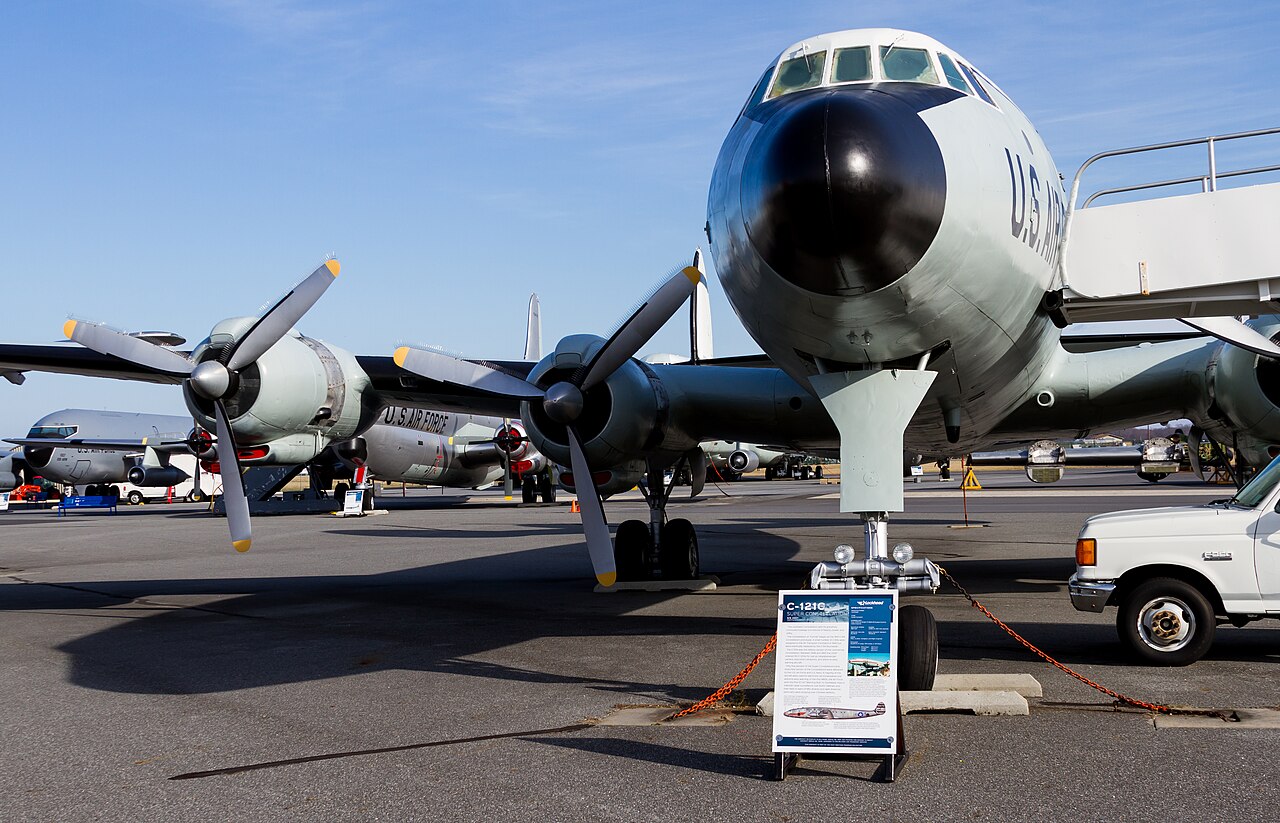
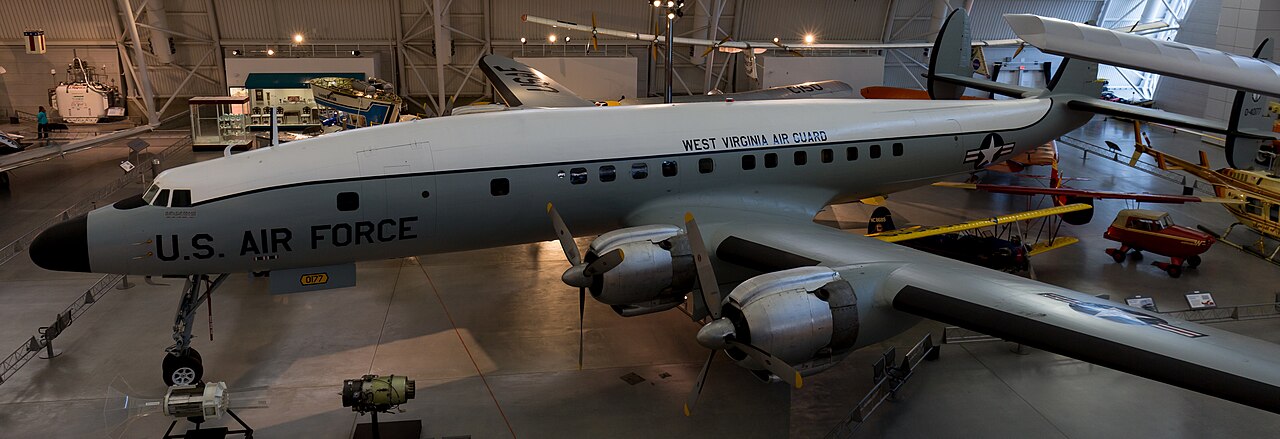
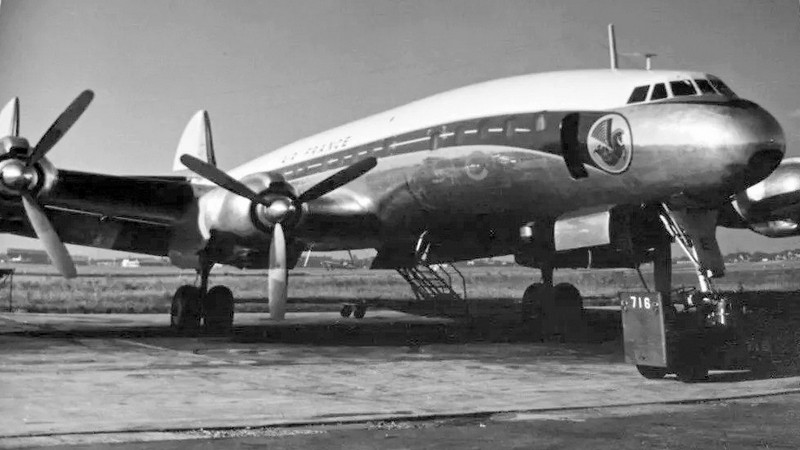
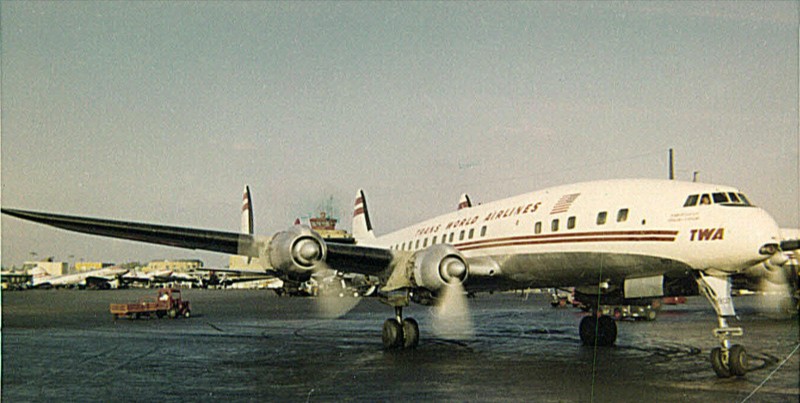
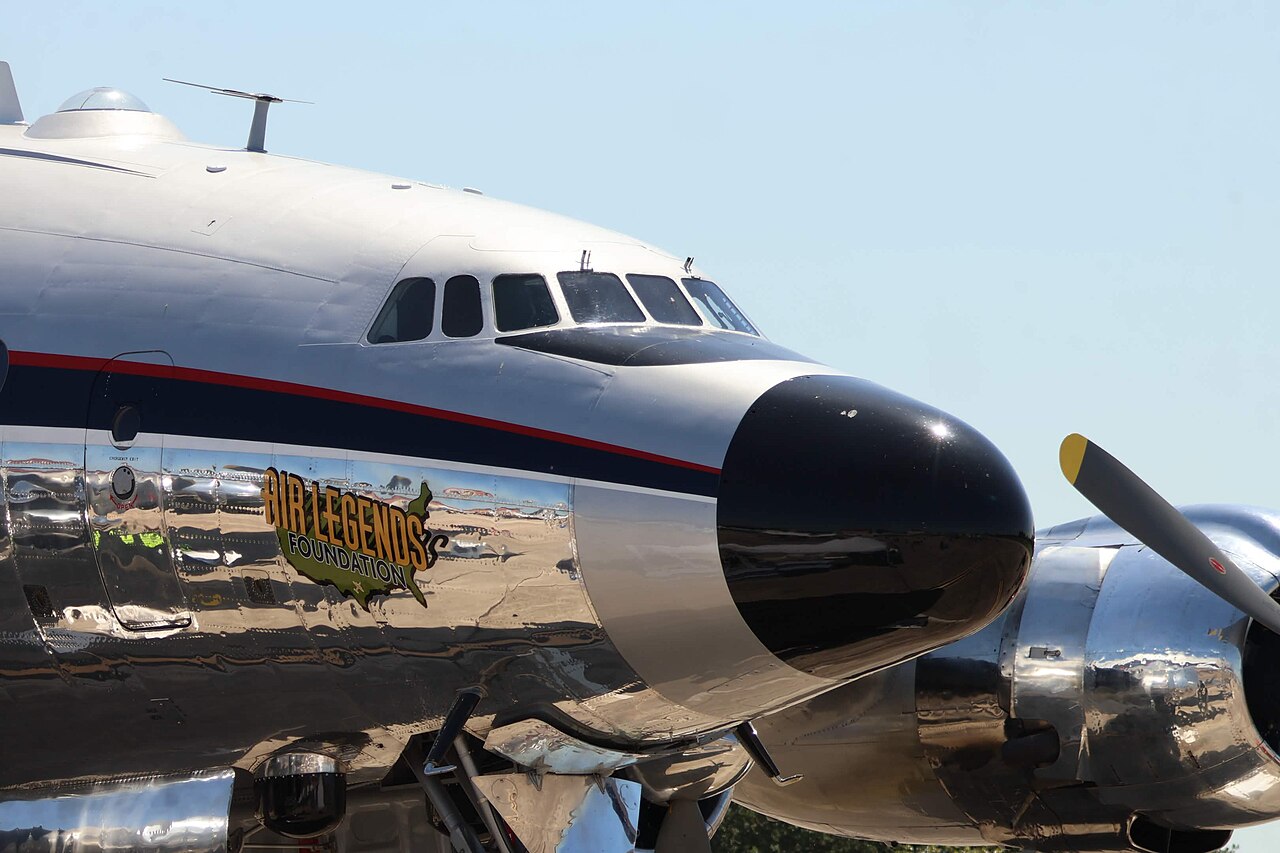
The Lockheed L-1049 Super Constellation is an American long-range airliner and a member of the Lockheed Constellation family. It was one of the most successful and widely used variants of the Constellation series, and was colloquially referred to as the "Super Connie". The L-1049 was Lockheed's response to the successful Douglas DC-6 airliner, first flying in 1950. The aircraft was produced for both the United States Navy as the WV / R7V and U.S. Air Force as the C-121 for transport, electronics, and airborne early warning and control aircraft.
- Manufacturer
- Lockheed
- First flight
- 1950
- Primary engines
- Four Wright R-3350 Duplex-Cyclones
- Notable operators
- TWA, Eastern Air Lines, Air France, KLM, Qantas
Verified Timeline
Lore & Background
Lockheed's ambition to stretch the Constellation family dates back to 1943, with early plans for the L-049 (13 feet longer) and the L-749 (18 feet longer). Yet it was the Douglas DC-6B that truly sharpened the competitive stakes. The DC-6B could accommodate 23 more passengers than Lockheed's then-current L-749, creating an urgent market threat. Lockheed answered by buying back the XC-69 prototype from Hughes Tool Company in 1950, stretching it by 18 feet, and using it as the structural basis for the L-1049. The outcome was far more than a longer fuselage. The new airframe carried approximately 550 refinements over the L-749, ranging from expanded fuel tanks and rectangular cabin windows to larger cockpit windshields and upgraded heating and pressurization. Eastern Air Lines committed to ten aircraft, and TWA followed with fourteen, signaling that the airline market recognized the type's potential. The first production unit flew on July 14, 1951, and earned certification that November, establishing the Super Connie as a serious contender in the postwar long-range airliner market.
Reader's Guide
The L-1049C, first flown on February 17, 1953, represented a genuine leap in piston-engine technology. Lockheed installed R-3350 Turbo-Compound engines built around a Power Recovery Turbine system. Rather than allowing exhaust gases simply to expand and dissipate, each engine housed three turbines that captured the velocity energy in the exhaust flow and fed it back mechanically into the crankshaft. The net gain was 550 horsepower—about 410 kilowatts—per engine, achieved with no rise in fuel consumption and virtually no added backpressure. A striking visual byproduct of this setup was a visible exhaust flame, most apparent after dark, produced by the rich high-power fuel mixture and the tight discharge pattern of the turbine outlets. Lockheed had to fit protective shielding to guard nearby airframe structure from heat damage. The L-1049C also delivered a higher cruising speed and improved climb rate, while strengthened wings, enhanced cabin soundproofing, and a revised landing-gear retraction system rounded out the upgrade. Forty-eight were built and flew with Eastern, TWA, Air France, KLM, Qantas, Air India, and a dozen other carriers.
Did You Know?
- The L-1049 was Lockheed's response to the Douglas DC-6, which could carry 23 more passengers than Lockheed's L-749.
- The L-1049C's Power Recovery Turbine system added 550 hp per engine without increasing fuel consumption, producing a visible exhaust flame at night.
- The L-1049G, nicknamed "Super G" by TWA, could fly nonstop from Europe to New York by adding wingtip tanks with 1,037 gallons of fuel.
- The last commercial flight of the L-1049 Super Constellation was in 1993, when the FAA banned Dominican airlines flying Constellations to the US.
- The Indian Air Force and Indian Navy retired their last Super Constellations between 1981 and 1983, making India the last military operator.
Competitive Genesis & Engineering Evolution
Lockheed's ambition to stretch the Constellation family dates back to 1943, with early plans for the L-049 (13 feet longer) and the L-749 (18 feet longer). Yet it was the Douglas DC-6B that truly sharpened the competitive stakes. The DC-6B could accommodate 23 more passengers than Lockheed's then-current L-749, creating an urgent market threat. Lockheed answered by buying back the XC-69 prototype from Hughes Tool Company in 1950, stretching it by 18 feet, and using it as the structural basis for the L-1049. The outcome was far more than a longer fuselage. The new airframe carried approximately 550 refinements over the L-749, ranging from expanded fuel tanks and rectangular cabin windows to larger cockpit windshields and upgraded heating and pressurization. Eastern Air Lines committed to ten aircraft, and TWA followed with fourteen, signaling that the airline market recognized the type's potential. The first production unit flew on July 14, 1951, and earned certification that November, establishing the Super Connie as a serious contender in the postwar long-range airliner market.
The Turbo-Compound Revolution
The L-1049C, first flown on February 17, 1953, represented a genuine leap in piston-engine technology. Lockheed installed R-3350 Turbo-Compound engines built around a Power Recovery Turbine system. Rather than allowing exhaust gases simply to expand and dissipate, each engine housed three turbines that captured the velocity energy in the exhaust flow and fed it back mechanically into the crankshaft. The net gain was 550 horsepower—about 410 kilowatts—per engine, achieved with no rise in fuel consumption and virtually no added backpressure. A striking visual byproduct of this setup was a visible exhaust flame, most apparent after dark, produced by the rich high-power fuel mixture and the tight discharge pattern of the turbine outlets. Lockheed had to fit protective shielding to guard nearby airframe structure from heat damage. The L-1049C also delivered a higher cruising speed and improved climb rate, while strengthened wings, enhanced cabin soundproofing, and a revised landing-gear retraction system rounded out the upgrade. Forty-eight were built and flew with Eastern, TWA, Air France, KLM, Qantas, Air India, and a dozen other carriers.
Variant Proliferation & Specialized Roles
The Super Constellation family expanded rapidly to meet diverse operational demands. The L-1049D, first flown in August 1954, was a purpose-built freighter featuring two left-side cargo doors and a reinforced floor, rated for a 36,916-pound payload within 5,579 cubic feet of cargo volume; only four were produced, all delivered to Seaboard & Western Airlines. The L-1049E proved more commercially viable, with 28 delivered to eight airlines, blending the C-model's passenger layout with the D's higher takeoff and landing weights. The L-1049G, dubbed the "Super G" by TWA, solved the problem that earlier models could not fly nonstop from Europe to New York against prevailing winds. It added more powerful turbo-compound engines, wingtip fuel tanks contributing 1,037 gallons of extra capacity and extending range by 1,110 miles, and over 100 other modifications. More than 100 were ordered by sixteen airlines. The L-1049H, nicknamed the "Husky," offered a convertible passenger-freight cabin that could seat up to 120 people with full amenities, stowing seats and lockers in the lower hold when configured for cargo. Military derivatives served the Navy as WV/R7V and the Air Force as C-121 in transport, electronics, and airborne early-warning roles.
Global Footprint & Enduring Reputation
The Super Constellation earned its affectionate nickname, the "Super Connie," through the sheer breadth of its adoption worldwide. From its 1950 first flight, the type found operators across multiple continents. The L-1049C alone served Eastern, TWA, Air France, KLM, Trans-Canada Air Lines, Qantas, Air India, Pakistan International Airlines, Avianca, Iberia, Línea Aeropostal Venezolana, and Cubana de Aviación. The L-1049G broadened that footprint further, with sixteen airlines placing orders and the type entering service with TWA and Northwest in 1955. The L-1049H reached Qantas in 1956, while the L-1049E found homes with eight additional carriers. Lockheed even outlined a final L-1049J variant in 1957, intended to use the more advanced TC-18EA engines shared with the L-1649 Starliner, though it never reached production. Cabin layouts spanned the 47-seat "Siesta" luxury configuration to the 105-seat "Inter-urban" high-density arrangement, each fitted with reading lights at every seat. The Super Constellation ultimately stood as the most successful and widely deployed member of the Constellation family, a mark of sustained competitive engineering during the early jet-transition era.
Common Misconceptions (Editorial)
Some believe the Lockheed Constellation was originally designed with the stretched L-1049 variant in mind, but early stretch plans dated to 1943 for the L-049 and L-749, and the L-1049 itself was a direct competitive response to the Douglas DC-6B. Others assume the Super Constellation was purely a civil airliner, but it was also produced for the U.S. Navy as the WV/R7V and for the U.S. Air Force as the C-121 for transport and airborne early warning.
Why It Matters (Editorial)
The Super Constellation endures as a symbol of postwar aviation ambition, where Lockheed’s engineering refinements — over 550 changes from the previous model — met the urgent demands of a rapidly expanding global airline market. Its legacy also lives on in military service, with variants serving as early warning aircraft, and its final commercial flight as late as 1993 reminds us that piston-engine airliners remained viable long into the jet age.
Gallery
Frequently Asked Questions
What is the Lockheed Constellation?
It is a four-engine propeller airliner developed by Lockheed Corporation, with its first flight on January 9, 1943. Affectionately nicknamed the 'Connie,' it became one of the most recognizable passenger planes of the late 1940s and 1950s.
Why was the Constellation a milestone in aviation?
It was the first civil airliner family to put a pressurized cabin into widespread commercial service, allowing it to cruise above most turbulent weather. That made long-haul passenger flights noticeably smoother and safer than the unpressurized aircraft that came before.
What made the Constellation visually distinctive?
Its most instantly recognizable feature is the triple vertical tail fin, giving it a silhouette unlike any other airliner of its era. Paired with a sleek, tapered fuselage, the design became an icon of the propeller-to-jet transition period.
Which airlines famously operated the Constellation?
Major operators included TWA, Pan Am, Eastern Air Lines, Air France, BOAC, KLM, Qantas, and Lufthansa. These carriers used the Connie as a workhorse for both domestic and transoceanic routes throughout the late 1940s and 1950s.
How many Constellations were built and over what period?
Lockheed produced a total of 856 airframes between 1943 and 1958. Each was powered by four Wright R-3350 Duplex-Cyclone radial engines, an 18-cylinder unit per nacelle.
More in Airliners 1-20
Spotted an error? Know more?
This is a living reference — every entry is fact-audited, and reader corrections feed straight into our audit queue. Suggest an edit · See this site's audit record