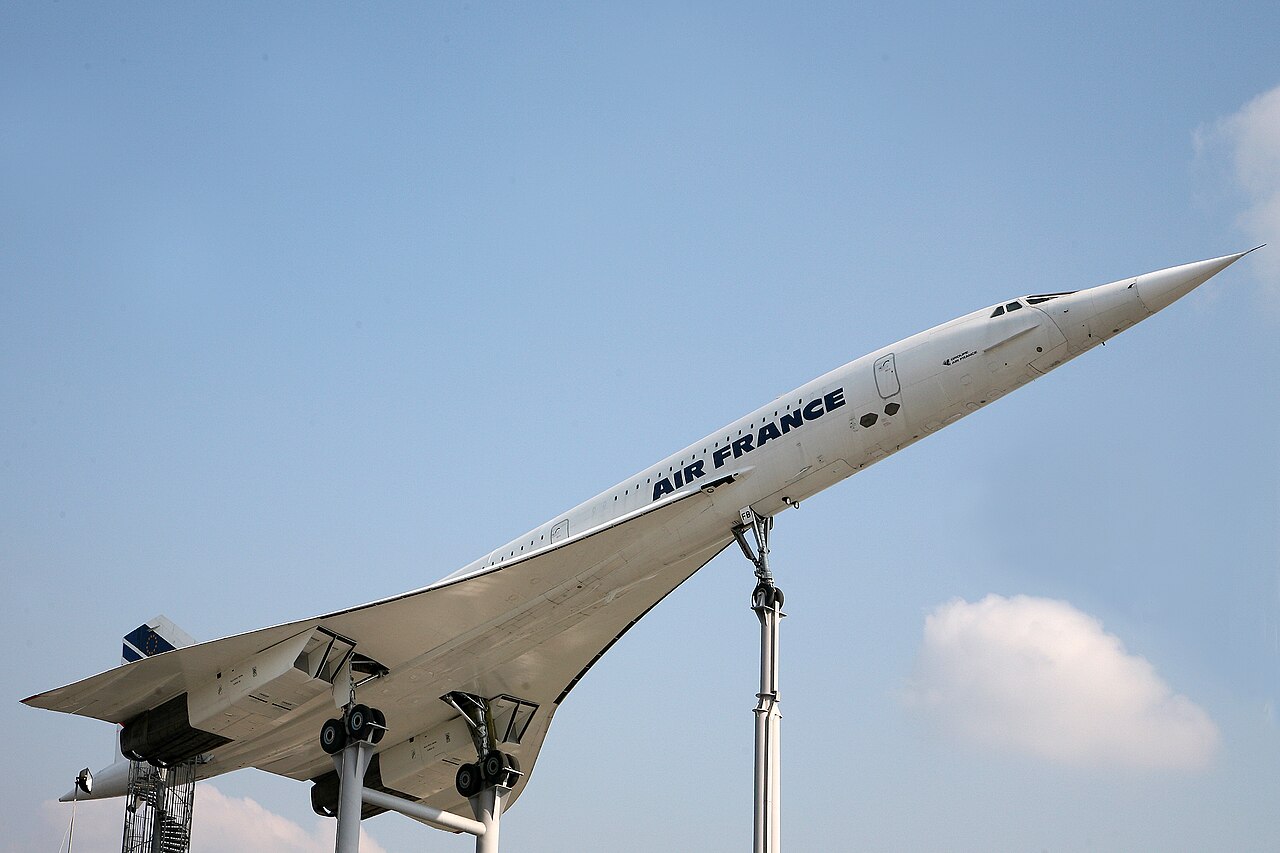
Concorde
Anglo-French supersonic airliner that halved transatlantic travel times.

Valder137 · CC BY 2.0
Concorde is a retired Anglo-French supersonic airliner jointly developed and manufactured by Sud Aviation and the British Aircraft Corporation (BAC). It entered service on 21 January 1976 with Air France and British Airways, and was among the first airliners to feature analogue fly-by-wire flight controls. Its supersonic flight more than halved travel times, but sonic booms limited it to transoceanic flights.
- Maximum speed
- Twice the speed of sound (requires afterburners for supersonic flight)
Lore & Background
The aircraft received its French certificate of airworthiness on 9 October 1975 and UK certification on 5 December 1975. It was powered by four Rolls-Royce/Snecma Olympus 593 turbojets with variable engine intake ramps and reheat for take-off and acceleration. Constructed from aluminium, it was among the first airliners with analogue fly-by-wire flight controls. Delays and cost overruns pushed costs to £1.5–2.1 billion in 1976. Only Air France and British Airways operated the aircraft, each with seven airframes, for a total production of twenty. Commercial service was suspended until November 2001, and the remaining aircraft were retired in 2003.
Reader's Guide
Concorde's significance lies in its demonstration of sustained commercial supersonic flight, reducing transatlantic travel times by more than half. Despite its technological achievements, Concorde faced economic and operational limitations. The market forecast was 350 aircraft, but only 20 were built, with Air France and British Airways as the sole customers. Sonic booms restricted it to transoceanic routes, and the 2000 crash led to a temporary suspension of service. The programme's cost overruns, from an initial estimate of £70 million to £1.5–2.1 billion, highlighted the financial challenges of supersonic transport. Concorde's legacy includes its influence on aerodynamics, particularly the slender delta wing design developed from Royal Aircraft Establishment research. Eighteen of the twenty aircraft built are preserved and on display in Europe and North America, serving as enduring symbols of Anglo-French engineering collaboration.
Did You Know?
- Concorde was among the first airliners to have analogue fly-by-wire flight controls.
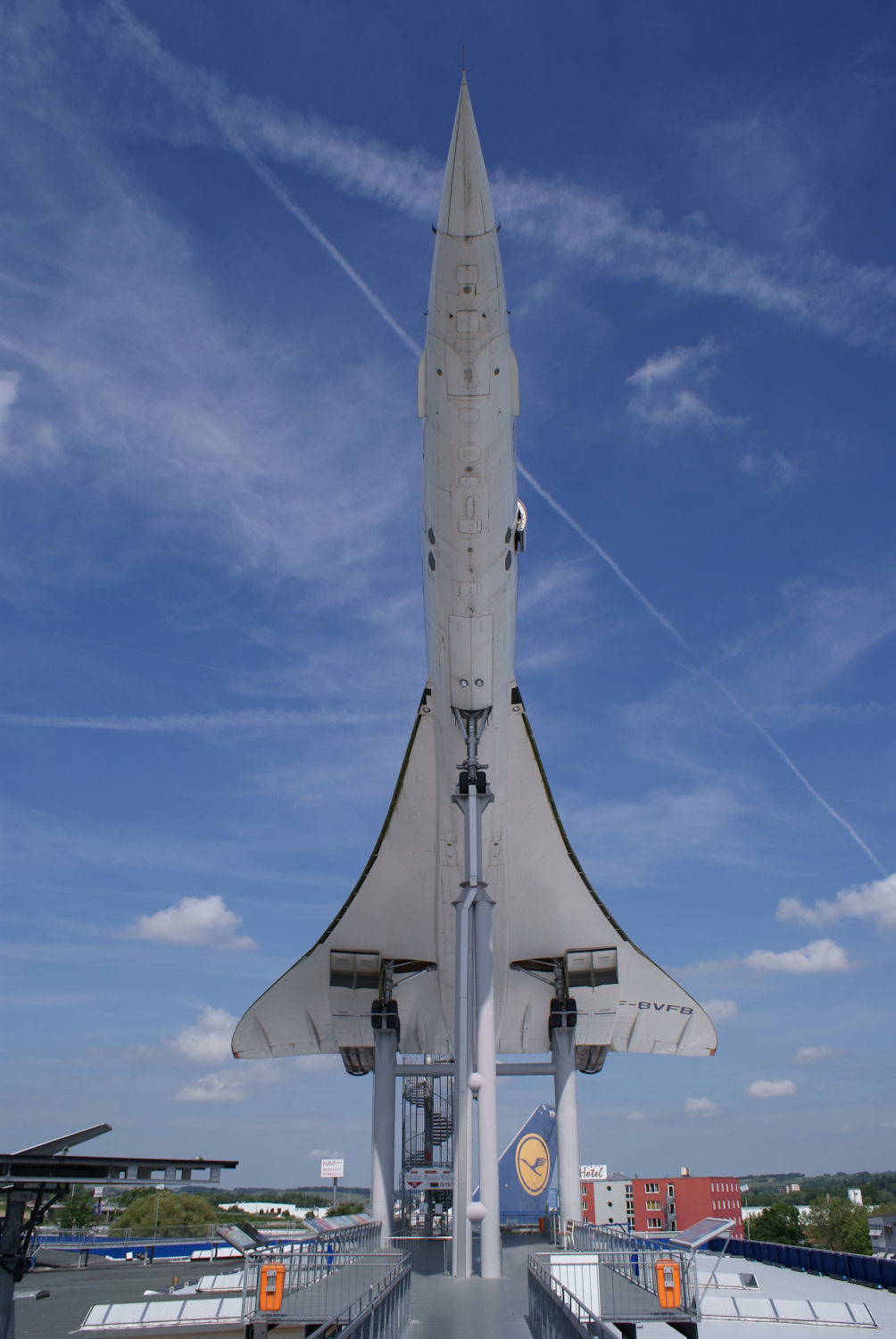
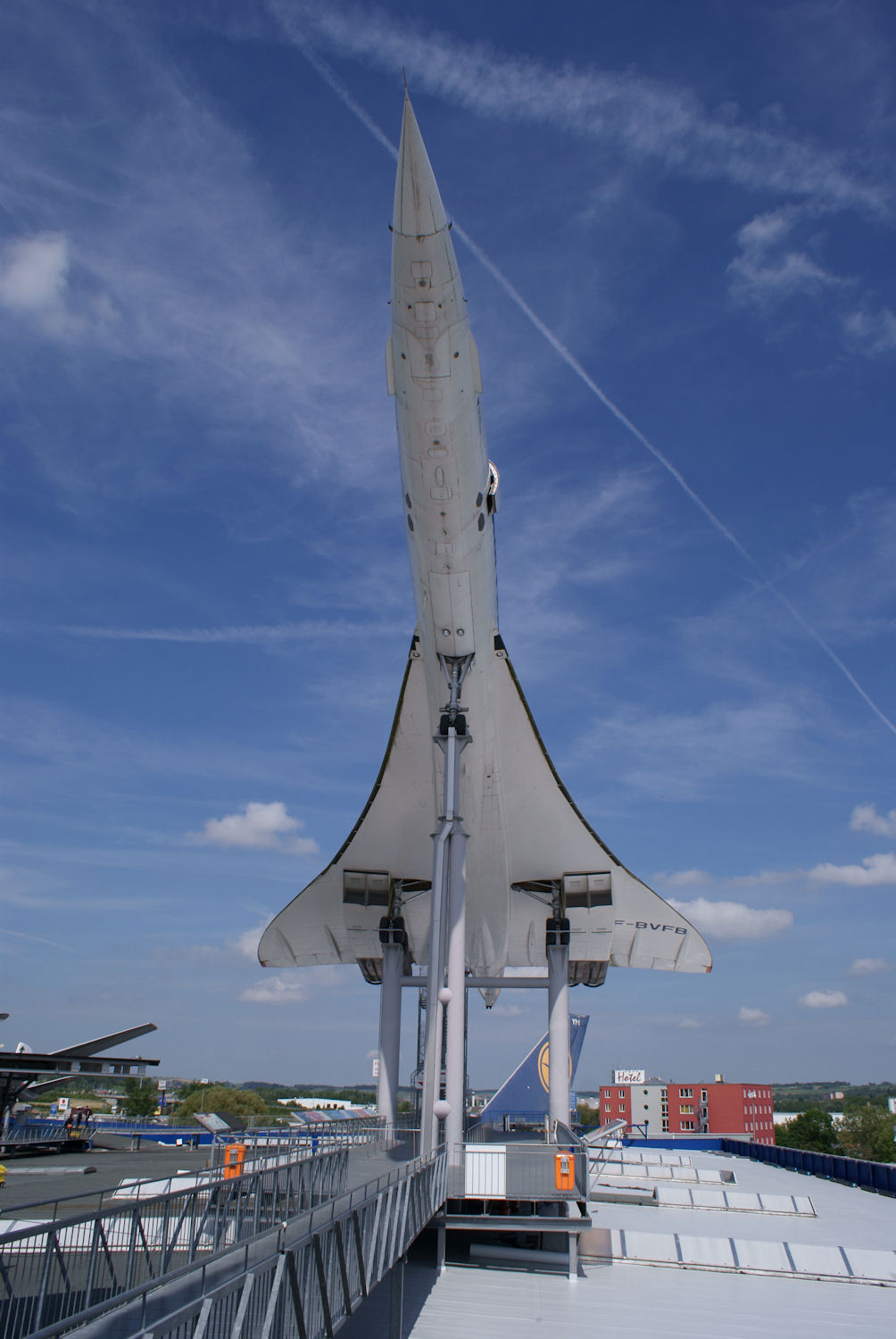
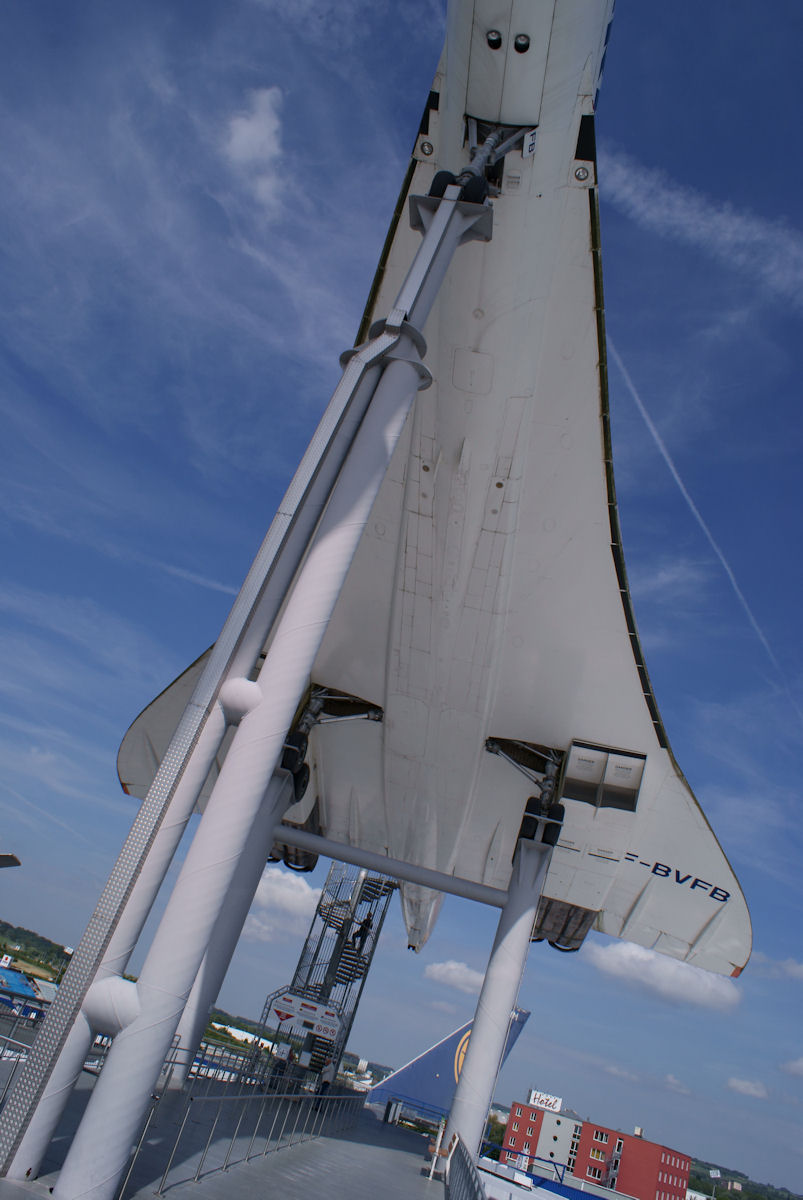
- Its ogival delta wing design was based on slender delta research by Johanna Weber and Dietrich Küchemann at the Royal Aircraft Establishment.
- Eighteen of the twenty Concorde aircraft built survive, with two scrapped (F-BVFD and F-WTSS).
The Slender Delta Revolution
The aerodynamic breakthrough that made Concorde possible began in the mid-1950s, when researchers at the Royal Aircraft Establishment confronted a stubborn contradiction: the short-span wings that minimized supersonic drag produced almost no lift at low speeds, making takeoff and landing prohibitively demanding. The initial 1954 study team, led by Morien Morgan, actually concluded that a practical supersonic airliner was infeasible, describing the required machines as "horribly large." The paradigm shifted when Johanna Weber and Dietrich Küchemann published their work on the "slender delta" wing, demonstrating that delta planforms could generate powerful vortices on their upper surfaces at high angles of attack. Those vortices lowered local air pressure and produced additional lift. Weber's key insight was that extending the wing along the fuselage maximized the effect, yielding a design that performed well at supersonic speeds while maintaining reasonable takeoff and landing characteristics. Test pilot Eric Brown recalled that Morgan immediately seized on the concept as the solution to the SST problem, a moment he regarded as the true birth of what would become Concorde.
A Joint Venture That Defied Its Forecasts
The original market forecast projected 350 aircraft, with up to 100 purchase options pledged by major carriers. Reality proved far more modest: only twenty airframes were ever built, split evenly between Air France and British Airways, the sole commercial operators. Certification followed in late 1975, France issuing its airworthiness certificate on 9 October and the UK CAA following on 5 December. Its four Rolls-Royce/Snecma Olympus 593 turbojets featured variable intake ramps and reheat capability for takeoff and the critical acceleration to supersonic speed, while the ogival delta wing and droop nose addressed the competing demands of high-speed cruise and low-speed visibility.
Halving the Atlantic, Limited by the Boom
Concorde entered commercial service on 21 January 1976, with Air France launching from Paris-Roissy and British Airways from London Heathrow. The transatlantic corridor became its defining route: service to Washington Dulles began on 24 May, and New York JFK followed on 17 October 1977. The aircraft's operational profile was extraordinary — it maintained transatlantic range while supercruising at twice the speed of sound for 75 percent of the distance, more than halving travel times compared with subsonic alternatives. Yet this very speed created a hard constraint: sonic booms over populated land limited Concorde to transoceanic routes only, as overland supersonic flight was prohibited. Its competitive landscape was narrow.
The Final Flight and a Museum Legacy
It remained the only fatal incident in Concorde's history, but its consequences were immediate and severe: all commercial flights were grounded until November 2001. The remaining fleet was ultimately retired in 2003, bringing to a close 27 years of commercial operations that had begun in 1976. Yet the story did not end on the tarmac. Eighteen of the twenty airframes ever built were preserved and placed on public display in museums across Europe and North America, ensuring that the physical artifact of this extraordinary Anglo-French engineering achievement remains accessible to generations who never heard it thunder overhead. The two that were not preserved represent a small loss, but the overwhelming majority of the fleet endures as a tangible reminder of a brief era when passenger aviation touched the edge of the supersonic realm, and of the remarkable collaboration between Sud Aviation and the British Aircraft Corporation that made it all possible.
Common Misconceptions (Editorial)
Some believe Concorde was the first airliner to use any form of fly-by-wire flight controls, but it was among the first to feature analogue fly-by-wire controls. Others assume it was a purely British project, when it was actually jointly developed by Sud Aviation and the British Aircraft Corporation.
Why It Matters (Editorial)
Concorde endures as a symbol of technological ambition and international cooperation, proving that government and industry could overcome enormous cost and engineering hurdles to dramatically shrink travel times. Its retirement marked the end of commercial supersonic travel, leaving a legacy that still inspires efforts to bring back faster-than-sound flight.
Gallery
Frequently Asked Questions
Who is Concorde?
Concorde is a retired supersonic passenger jet built jointly by France's Sud Aviation and Britain's BAC. It was the only commercial airliner ever to carry paying passengers at faster-than-sound speeds.
What are Concorde's powers and role?
Concorde could cruise at roughly twice the speed of sound, cutting transatlantic crossings in half compared to subsonic jets. Its sonic boom, however, restricted it to long-haul oceanic routes rather than overland flights.
How does Concorde's story end?
After nearly three decades of passenger service beginning in 1976, Concorde was retired from commercial operations in 2003. All remaining airframes were subsequently preserved in museums around the world.
Why is Concorde important?
It proved that supersonic passenger travel was technically feasible and introduced analogue fly-by-wire controls to the commercial aviation world. As the only supersonic airliner ever to fly scheduled passenger routes, it remains a landmark in aerospace history.
What makes Concorde unique among airliners?
Concorde was the first airliner to use analogue fly-by-wire flight controls and the only one to sustain supersonic cruise in regular commercial service. Its delta-wing design and afterburner-equipped engines let it reach Mach 2, a speed no other passenger jet has matched.
More in Airliners 1-20
Spotted an error? Know more?
This is a living reference — every entry is fact-audited, and reader corrections feed straight into our audit queue. Suggest an edit · See this site's audit record