
Airbus A320
Pioneering digital fly-by-wire controls in a best-selling narrow-body family.

Jakub Pietrasiak · CC BY-SA 4.0
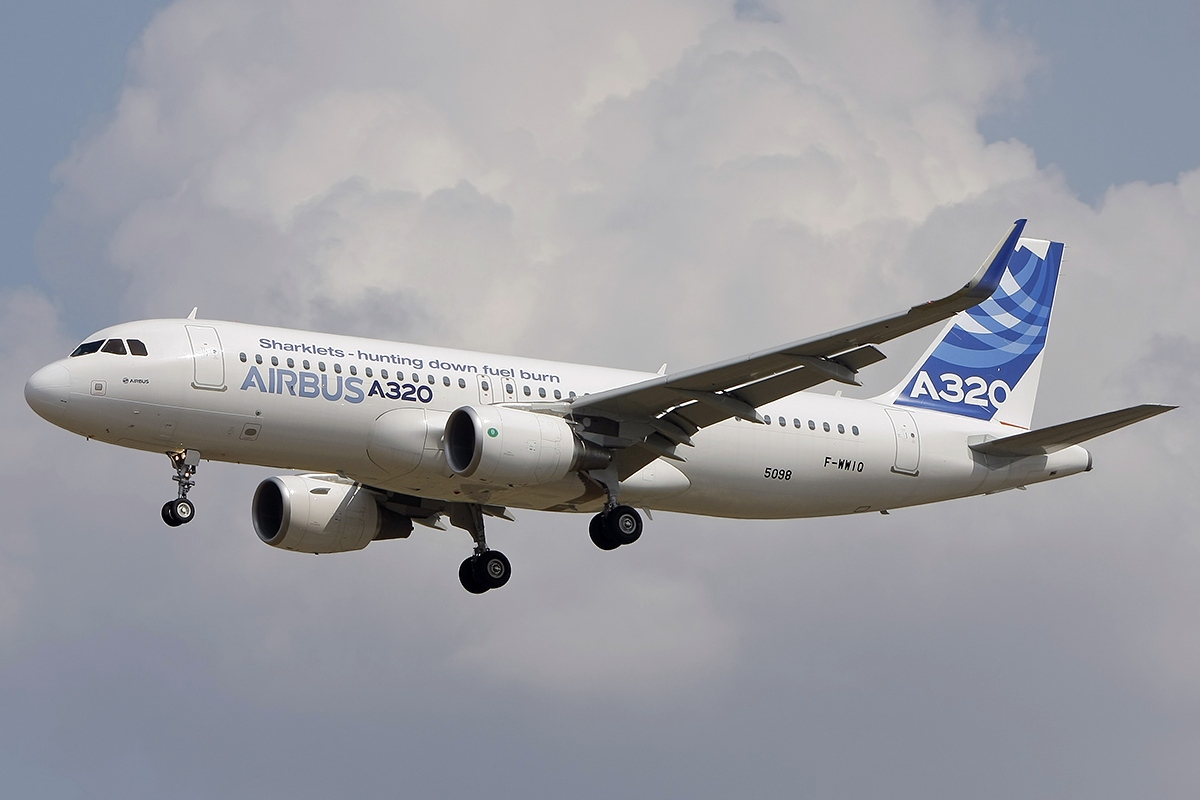
The family pioneered the use of digital fly-by-wire and side-stick flight controls in airliners.
- Variants
- A318, A319, A320, A321
- Engines
- CFM56-5A or -5B, or IAE V2500 (except A318, which uses CFM56-5B or PW6000)
Lore & Background
At the time, Airbus had 96 orders. During development, Airbus considered propfan technology but ultimately stuck with turbofans.
Reader's Guide
The Airbus A320 family is significant as the best-selling airliner ever built, overtaking the Boeing 737 family in total fleet size in 2017, in total orders in October 2019, and in total deliveries in September 2025. It pioneered digital fly-by-wire and side-stick flight controls in airliners, setting a new standard for cockpit design. The previous generation was renamed A320ceo.
Did You Know?
- The A320 family pioneered digital fly-by-wire and side-stick flight controls in airliners.
- The A320neo entered service with Lufthansa in January 2016, offering up to 15% better fuel economy.
From European Collaboration to a New Standard
The A320's roots stretch back to the late 1970s, when a Joint European Transport programme brought together British Aerospace, Aerospatiale, Dornier, and Fokker at a site in Weybridge, Surrey. A key design decision was the fuselage cross-section: rather than matching Boeing's 3.45-metre internal width, Airbus settled on a wider 3.7-metre cabin, enabling a six-abreast economy layout.
A Family That Grew in Every Direction
Engine options varied across the family: most variants could be fitted with CFM56-5A, CFM56-5B, or IAE V2500 turbofans, while the A318 was limited to either two CFM56-5B units or a pair of Pratt & Whitney PW6000 engines. Lufthansa welcomed the first neo into service in January 2016, and the earlier generation was retroactively renamed the A320ceo.
A Truly Global Production and Service Footprint
The A320 family's manufacturing footprint reflects its global ambition. On the operational side, the family has achieved a scale that few aircraft can match. The family also spawned the Airbus Corporate Jets, modified business-jet versions of the standard commercial variants, extending the platform's utility well beyond scheduled airline operations.
Overtaking the 737 and Redefining the Narrow-Body Race
The A320's competitive journey has been a long game. Initially, the A320ceo faced off against the Boeing 737 Classic and the McDonnell Douglas MD-80, then later against their successors, the 737 Next Generation and the MD-90. The turning point came in 2017, when the A320 family overtook the 737 in total fleet size. By October 2019 it had also surpassed the 737 in cumulative orders, and in September 2025 it claimed the lead in total deliveries as well. Boeing's answer to the A320neo has been the 737 MAX, keeping the narrow-body rivalry alive. What makes the A320's achievement remarkable is not just its sales record—holding the title of best-selling airliner ever built—but the technological leap it represented. The family pioneered digital fly-by-wire and side-stick flight controls in commercial airliners, setting a standard that reshaped how pilots interact with their aircraft and influencing every subsequent generation of narrow-body jets.
Common Misconceptions (Editorial)
Some people think all A320 family variants use the same engines, but the A318 is powered by either CFM56-5B or PW6000 engines, not the CFM56-5A or V2500 found on other variants.
Why It Matters (Editorial)
The Airbus A320 family endures because it redefined the standard for airliner cockpit technology, making digital fly-by-wire and side-stick controls the norm rather than the exception. Its continuous evolution, including the fuel-saving A320neo, ensures it remains a backbone of modern commercial aviation decades after its debut.
Gallery
Frequently Asked Questions
What makes the A320 technically special?
It was the first airliner family to adopt fully digital fly-by-wire flight controls and a side-stick controller in place of a conventional yoke. That fighter-jet-inspired approach fundamentally reshaped how commercial pilots handle the aircraft and became the blueprint for every later Airbus type.
Why is the A320 considered so important?
It demonstrated that a European consortium could build a globally competitive single-aisle jet and challenge the long-standing dominance of American narrow-bodies. Its commercial success validated the fly-by-wire philosophy and cemented Airbus as a permanent, top-tier player in the airliner market.
More in Airliners 1-20
Spotted an error? Know more?
This is a living reference — every entry is fact-audited, and reader corrections feed straight into our audit queue. Suggest an edit · See this site's audit record