
de Havilland Comet
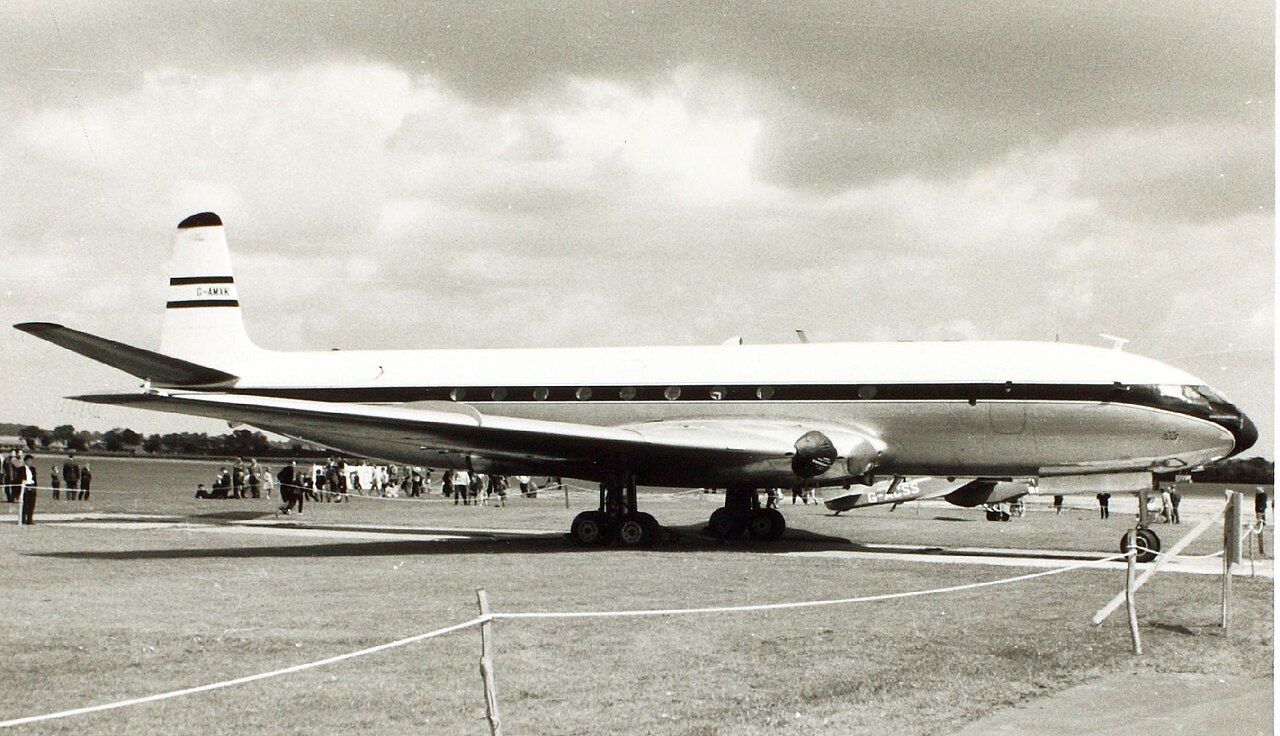
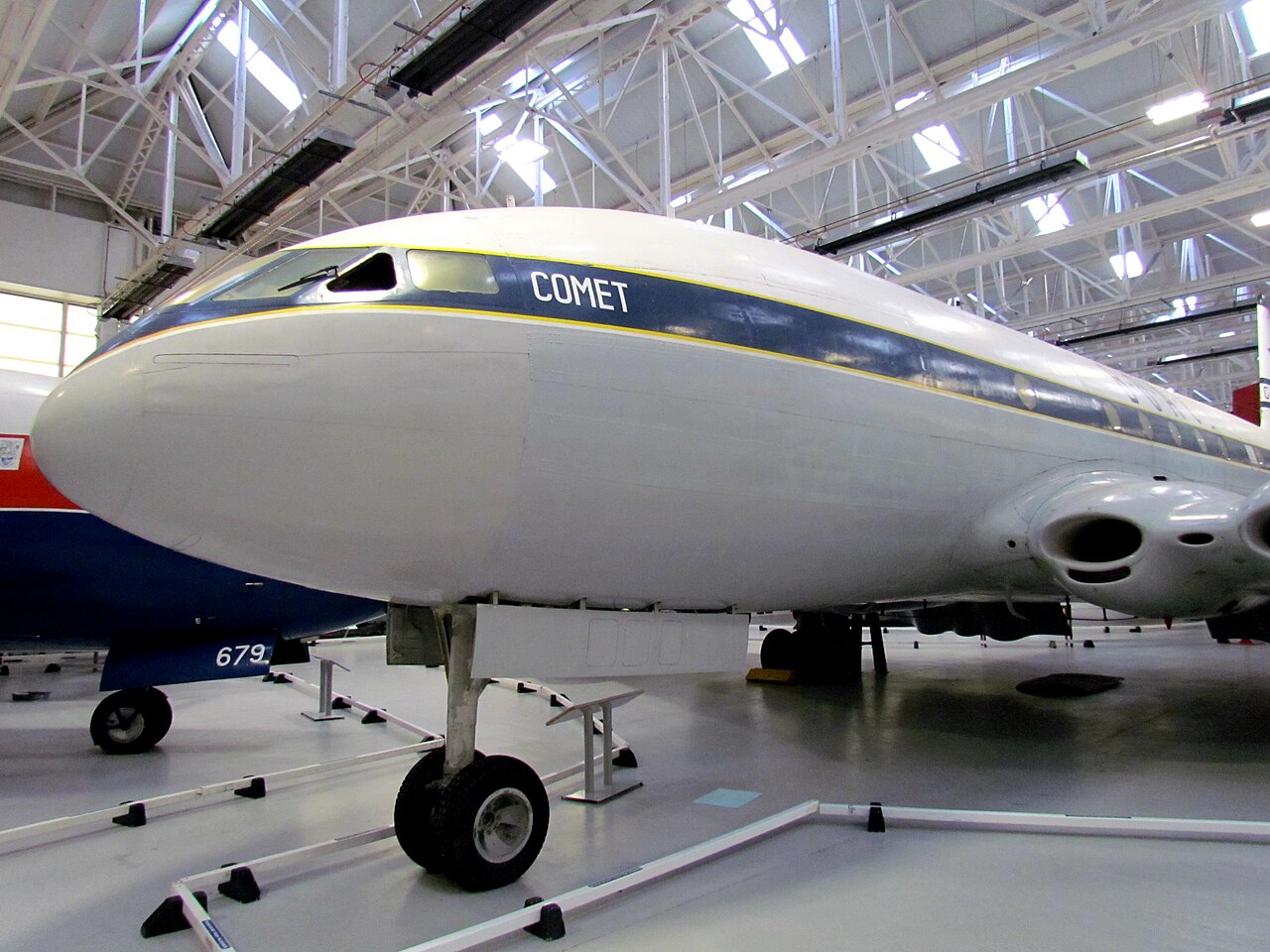
World's first commercial jet airliner, redesigned after early accidents.

charner1963 · CC0
It was the world's first commercial jet airliner, with its prototype first flying in 1949 and entering service in 1952. Despite early promise, the Comet suffered a series of catastrophic accidents due to metal fatigue and structural flaws, leading to its withdrawal and redesign, and its lessons influenced the entire aviation industry.
- field
- Aviation
- nationality
- United Kingdom
- known_for
- World's first commercial jet airliner
- first_flight
- 27 July 1949
- introduced
- 1952
- manufacturer
- de Havilland
Lore & Background
De Havilland, led by Sir Geoffrey de Havilland, championed a jet-propelled design, and the Type IV proposal was accepted in 1945. A design team under Ronald Bishop considered radical configurations but settled on a conventional swept-wing design with four engines buried in the wing roots. The first prototype flew on 27 July 1949, piloted by John Cunningham, and the Comet entered commercial service in 1952 with BOAC. Within a year, three Comets were lost in mid-flight accidents. Two were caused by metal fatigue in the airframe, a phenomenon not fully understood at the time, and the third by overstressing in severe weather. The aircraft was withdrawn and extensively tested, revealing dangerous stress concentrations around square cut-outs for ADF antennas. The Comet was also adapted for military roles, including VIP, medical, passenger transport, and surveillance.
Reader's Guide
The de Havilland Comet holds a pivotal place in aviation history as the world's first commercial jet airliner, demonstrating the potential of jet travel for passenger service. Its early success was overshadowed by catastrophic accidents caused by metal fatigue and design flaws, particularly around square window cut-outs and ADF antenna openings. The subsequent investigation and redesign were groundbreaking, leading to a better understanding of metal fatigue and the importance of fail-safe structures. Rival manufacturers heeded these lessons when developing their own aircraft, improving safety across the industry. Although the Comet's commercial sales never fully recovered, the redesigned Comet 4 series served reliably for decades, and its military derivative, the Nimrod, extended the design's legacy into the 21st century. The Comet's story is a cautionary tale of innovation outpacing understanding, but also a testament to the value of rigorous testing and redesign in advancing aviation safety.
Did You Know?
- The Comet's prototype first flew on 27 July 1949, piloted by John 'Cats Eyes' Cunningham.
- Two of the three early Comet accidents were caused by metal fatigue, a phenomenon not fully understood at the time.
- The Comet's design flaws included dangerous stress concentrations around square cut-outs for ADF antennas.
A Bold Bet on the Jet Age
Among its recommendations was a pressurised transatlantic mailplane capable of carrying one long ton of payload at 400 mph. De Havilland saw an opportunity to upend prevailing assumptions: the company's leader, Sir Geoffrey de Havilland, leveraged his personal standing to argue that turbojet propulsion, long dismissed as too thirsty and unreliable, could in fact power such an aircraft. De Havilland therefore had to pioneer both the airframe and its powerplant. What began as a short-range mailplane with as few as six seats was progressively redefined, eventually becoming a 36-passenger airliner under chief designer Ronald Bishop, who settled on a conventional 20-degree swept-wing layout after more radical tailless concepts proved too risky.
Catastrophe and the Hidden Science of Fatigue
The Comet's debut in 1952 was met with genuine excitement—its aerodynamically clean fuselage, four Ghost turbojets buried in the wing roots, pressurised cabin, and generously sized windows made it feel like a leap into the future. Yet within twelve months of entering airline service, three aircraft had been destroyed in mid-flight catastrophes that captured global headlines. The fleet was immediately grounded. What followed was one of the most consequential engineering investigations of the twentieth century. Investigators discovered that two of the losses stemmed from metal fatigue, a progressive weakening of the airframe under repeated pressurisation cycles that the industry had not yet fully grasped. The third accident traced back to the airframe being overstressed while battling severe weather. A particularly insidious flaw was identified: the square cut-outs housing the automatic direction finder antennas created dangerous stress concentrations that acted as crack-initiation points. The Comet was rebuilt with structural reinforcements and other corrections. Crucially, rival manufacturers around the world absorbed these hard-won lessons and applied them to their own jet programmes, ensuring the Comet's tragedies would not be repeated.
Redemption and a Long Commercial Life
The redesigned Comet did not simply return to the skies—it evolved through several iterations before finding its enduring form. The Comet 2 addressed the most urgent structural concerns, while the prototype Comet 3 pushed performance further. Sales never fully recovered to the levels initially projected by BOAC and British South American Airways, but the type carved out a loyal niche. Beyond passenger and mail duties, the Comet was adapted for a range of military and government roles, including VIP transport, medical evacuation, general passenger carriage, and aerial surveillance.
The Nimrod and a Lasting Shadow
Perhaps the most remarkable chapter in the Comet's story is the one that extended far beyond its original design intent. The airframe's fundamental architecture—its four-engine wing-root layout, pressurised fuselage, and long-range capability—proved so adaptable that it was transformed into the Hawker Siddeley Nimrod, a specialised maritime patrol aircraft. This derivative represented the most extensive modification ever applied to the Comet platform. The Comet's legacy also extends into the broader engineering culture. The metal fatigue failures of the early 1950s forced the entire aerospace industry to confront a phenomenon that had been poorly understood, reshaping how airframes were designed, tested, and certified worldwide. In that sense, the Comet's greatest contribution may not be the aircraft itself but the hard-won knowledge its disasters imparted to every manufacturer that followed.
Common Misconceptions (Editorial)
Some believe the Comet's crashes were solely due to metal fatigue, but one of the three early losses was caused by overstressing in severe weather, not fatigue. Others think the entire Comet design was a failure, yet it was successfully adapted for military roles including VIP, medical, passenger transport, and surveillance. A common myth is that the square windows caused the accidents, but the specific flaw was stress concentrations around square cut-outs used for ADF antennas.
Why It Matters (Editorial)
The de Havilland Comet endures as a cautionary tale of innovation outpacing material science, transforming aviation safety by forcing the industry to understand and test for metal fatigue. Its legacy is not simply one of tragedy, but of a hard-won lesson that made every subsequent jetliner safer, proving that even catastrophic failure can lead to profound progress.
Gallery
Frequently Asked Questions
When did the de Havilland Comet first take to the skies?
The prototype made its maiden flight on 27 July 1949, and the type entered commercial airline service in 1952.
Why was the de Havilland Comet pulled from service so early?
A string of in-flight breakups in the early 1950s traced back to metal fatigue around the square cabin windows and other structural weaknesses forced operators to ground the fleet. The resulting redesign and investigation reshaped how every future airliner is certified.
What makes the de Havilland Comet so important to aviation history?
As the world's first commercial jet airliner, it proved that jet propulsion could work in passenger service and set the template for the industry that followed. Its tragic early failures also became the textbook case study in airframe fatigue and safety regulation.
More in Airliners 1-20
Spotted an error? Know more?
This is a living reference — every entry is fact-audited, and reader corrections feed straight into our audit queue. Suggest an edit · See this site's audit record