Boeing 747
First wide-body airliner, known as the Jumbo Jet.

Luis Miguel Bugallo Sánchez (Lmbuga) · CC BY-SA 4.0
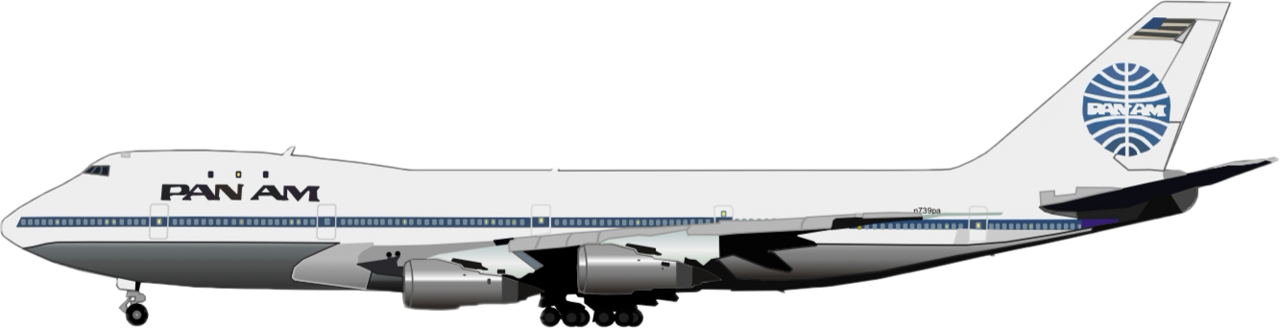
It was conceived in response to Pan Am's demand for a jet 2+1⁄2 times the size of the 707, to reduce seat cost by 30%, and became the first wide-body airliner, known as the 'Jumbo Jet.'
Lore & Background
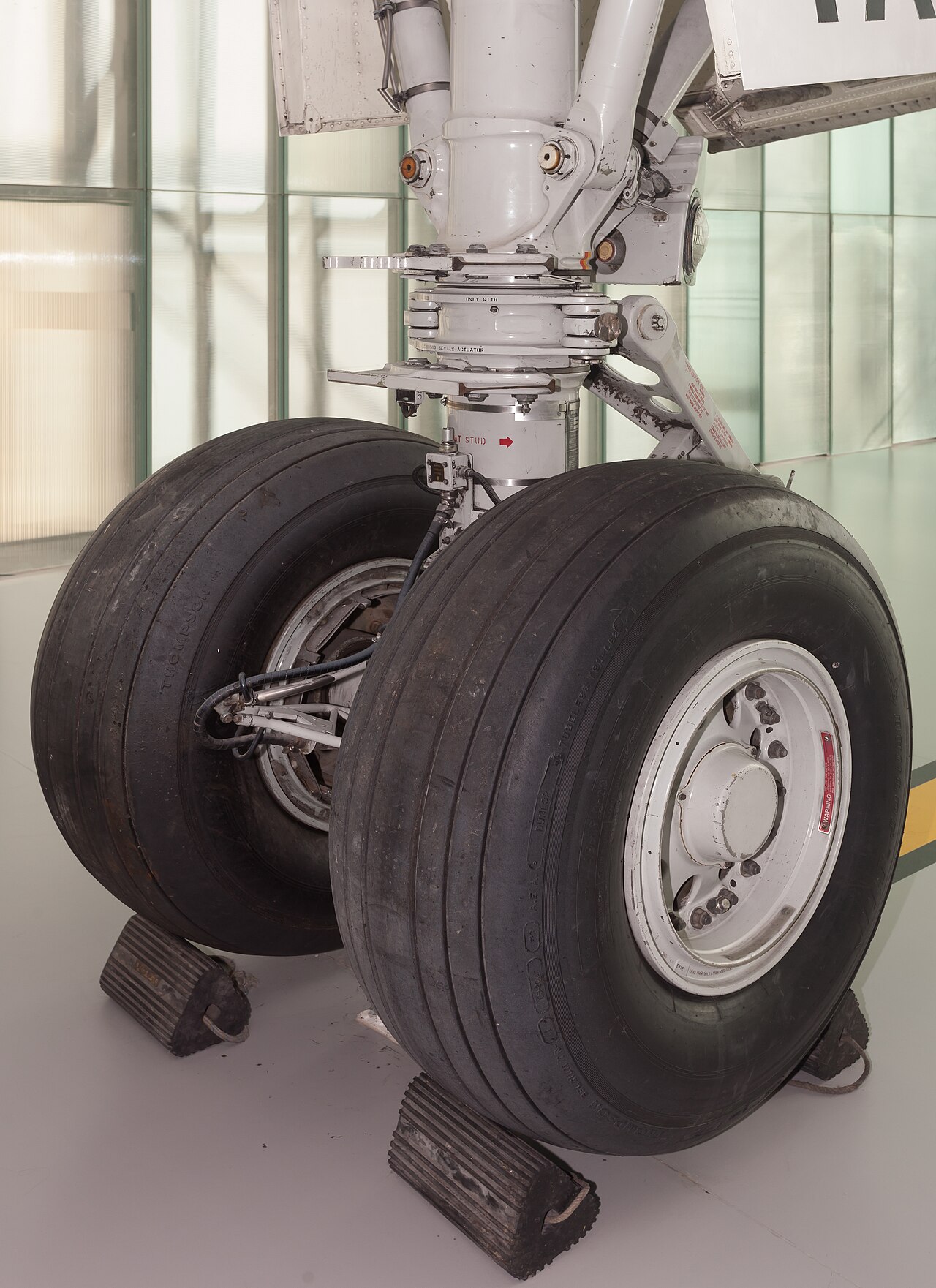
The 747 features a pronounced 37.5° wing sweep, a raised cockpit to allow conversion to a freighter, and four main landing gear legs each with a four-wheel bogie. Initial variants were powered by Pratt & Whitney JT9D engines, later by General Electric CF6 and Rolls-Royce RB211 engines.
Reader's Guide
The Boeing 747 revolutionized long-distance air travel by offering a 30% reduction in seat cost compared to the 707, enabling mass air travel on international routes. It was the first wide-body airliner and set a new standard for passenger capacity and range. The 747 also served as the basis for several government and military variants, including the VC-25 (Air Force One), E-4 Emergency Airborne Command Post, Shuttle Carrier Aircraft, and experimental aircraft like the YAL-1 and SOFIA. Initial competition came from trijet widebodies such as the Lockheed L-1011 and McDonnell Douglas DC-10, and later from the Airbus A380 and larger Boeing 777 variants. Freighter variants remained popular with cargo airlines.
Did You Know?
- The 747 was designed with a raised cockpit so it could be converted to a freighter by installing a front cargo door.
- The 747 was the first airplane called a 'Jumbo Jet' as the first wide-body airliner.
- The 747-8 name was chosen to reflect the new generation of technology, not specifically because of the GEnx engine.
From Concept to Cockpit: The Long Road to the 747-8
Boeing spent nearly two decades exploring bigger 747 concepts before the 747-8 finally took shape. The 747-500X and -600X, unveiled at the 1996 Farnborough Airshow, were ambitious stretches that never attracted enough orders. A more modest 747X proposal in 2000, pitched against Airbus's emerging A3XX, also failed to reach production. The 747-400XQLR study, which explored raked wingtips and sawtooth nacelles for range and noise gains, never advanced either. What endured was a philosophy of incremental modernization on a proven airframe. Fly-by-wire ailerons and spoilers rounded out the systems, while the basic structure and wing sweep of earlier 747s were retained, preserving the economic benefits of shared training and interchangeable parts.
The A380 Rivalry and a Shifting Market
The 747-8 was conceived in the shadow of Airbus's full-length double-deck A380, and the two were repeatedly pitched as head-to-head rivals on long-haul routes. Boeing's marketing team calculated that the 747-8 was more than ten percent lighter per seat and consumed eleven percent less fuel per passenger than its French competitor, translating into a twenty-one percent reduction in trip cost and over six percent savings in seat-mile cost. Reality proved far more modest. The freighter side fared better, with launch customer Cargolux reaffirming its commitment even as Boeing absorbed a one-billion-dollar charge for schedule slippage.
Surviving the Storm: Delays, Doubt, and Delivery
The path from announcement to first flight was anything but smooth. Production of the initial 747-8 Freighter began in Everett in early August 2008, but just three months later Boeing announced a program delay, citing constrained engineering resources, ongoing design changes, and a strike by factory workers. Chief executive Jim McNerney went so far as to say the project's future was not a foregone conclusion, and the company openly assessed various options, including possible cancellation of the passenger variant. Yet the program endured.
The Final Jumbo: A Legacy in Numbers
As the final and largest entry in the 747 lineage, the 747-8 holds several superlatives that anchor its place in aviation history. That freighter-heavy split reflects where the 747's commercial life now resides: in the global cargo network rather than the passenger cabin. As the final expression of Boeing's large, long-range wide-body 747 family, the 747-8 represents both a culmination and a curtain call, the last word written in the 747 story.
Common Misconceptions (Editorial)
Some people think the "747-8" name refers to its eight engines, but the facts note it was chosen to reflect new technology, not because of the GEnx engine. Others believe the raised cockpit was only for pilot visibility, when in fact it was designed to allow conversion to a freighter by installing a front cargo door.
Why It Matters (Editorial)
The Boeing 747 remains an icon of aviation because it democratized long-distance air travel, slashing seat costs by 30% while introducing the wide-body cabin that made flying more comfortable. Its adaptable design, from passenger jet to freighter, also ensured its endurance as a workhorse of global commerce, proving that visionary engineering can shape both culture and industry for decades.
Gallery
Frequently Asked Questions
What is Boeing 747's role in the Airliners roster?
It serves as the flagship long-haul carrier, offering the first-ever wide-body cabin layout that let airlines pack significantly more passengers per seat than earlier narrow-body jets. Its design goal was to cut per-seat costs by roughly 30% compared to the 707 generation.
Why is Boeing 747 important to aviation history?
As the first wide-body airliner ever built, it fundamentally reshaped commercial flying by making long-distance travel far more economical and accessible. Its introduction set the template for every large passenger jet that followed.
What sparked Boeing 747's creation?
Pan Am approached Boeing in the mid-1960s requesting a jet at least two-and-a-half times the size of the 707, with a 30% reduction in cost per seat. That single customer demand is what set the 747 program in motion.
More in Airliners 1-20
Spotted an error? Know more?
This is a living reference — every entry is fact-audited, and reader corrections feed straight into our audit queue. Suggest an edit · See this site's audit record